Author information
Introduction
C-X-C motif chemokine receptor 4 (CXCR4) is an integral membrane protein that specifically binds to the C-X-C motif chemokine ligand 12 (CXCL12). CXCR4 is expressed in a variety of cell types, including lymphocytes, endothelial cells, hematopoietic stem cells, stromal fibroblasts, and cancer cells.1 CXCR4 is directly involved in various physiological processes, including hematopoiesis and immune responses,2,3 neurogenesis,4 germ cell development, cardiogenesis and angiogenesis,5–7 and osteogenesis.8 In malignancies, CXCR4 is involved in tumor cell (TC) proliferation, metastasis, angiogenesis, and immune evasion.1 CXCR4 expression can be activated in breast cancer (BC) cells after exposure to hypoxia, vascular endothelial growth factor, nuclear factor kappa B, estrogens, transforming growth factor β1, β-catenin, and interferon γ.9–12 The interaction of CXCR4 with CXCL12 activates various pro-oncogenic signaling pathways, including Janus kinase/signal transducer and activator of transcription (JAK/STAT), phosphatidylinositol 3-kinase/protein kinase B/mitogen-activated protein kinase (PI3K/AKT/MAPK), and PI3K/AKT/mammalian target of rapamycin (PI3K/AKT/mTOR), leading to stimulation of chemotaxis and proliferation of TCs and enhancing their invasive and metastatic properties.12–16 Furthermore, the CXCL12/CXCR4 signaling pathway can activate human epidermal growth factor receptor 2 (HER2) and promote drug resistance through epithelial–mesenchymal transition, cancer cell stemness, and interactions with the tumor microenvironment.12,17–19
Importantly, most studies on the role of CXCR4 in BC progression are experimental. Therefore, the objective of this study was to evaluate the features of CXCR4 expression in TCs and immune cells (ICs) and to determine the correlation of these markers with clinical characteristics and prognosis in patients with BC.
Materials and methods
This prospective, single-center cohort study aimed to evaluate the features of CXCR4 expression in TCs and ICs and to determine the correlation of these markers with clinical characteristics and prognosis in patients with BC. This study was reported in accordance with the STROBE guidelines.
Patient characteristics
This prospective, single-center cohort study included 115 patients aged 37 to 87 years (65.1 ± 11.4 years, median 64 years). This study is a continuation of a prospective cohort study investigating factors in BC progression that included 148 patients with newly diagnosed stage T1–T2 BC.20,21 To study the expression patterns of CXCR4 in TCs and ICs, 115 paraffin-embedded tumor blocks with sufficient tumor tissue for high-quality immunohistochemistry were collected. Considering that, for a confidence level of 95%, a confidence interval (CI) of 5%, and a population size of 148 patients, the required sample size is 105 patients, the cohort size of 115 patients is sufficient to obtain statistically significant conclusions. A flow diagram of the study design is shown in Figure 1.
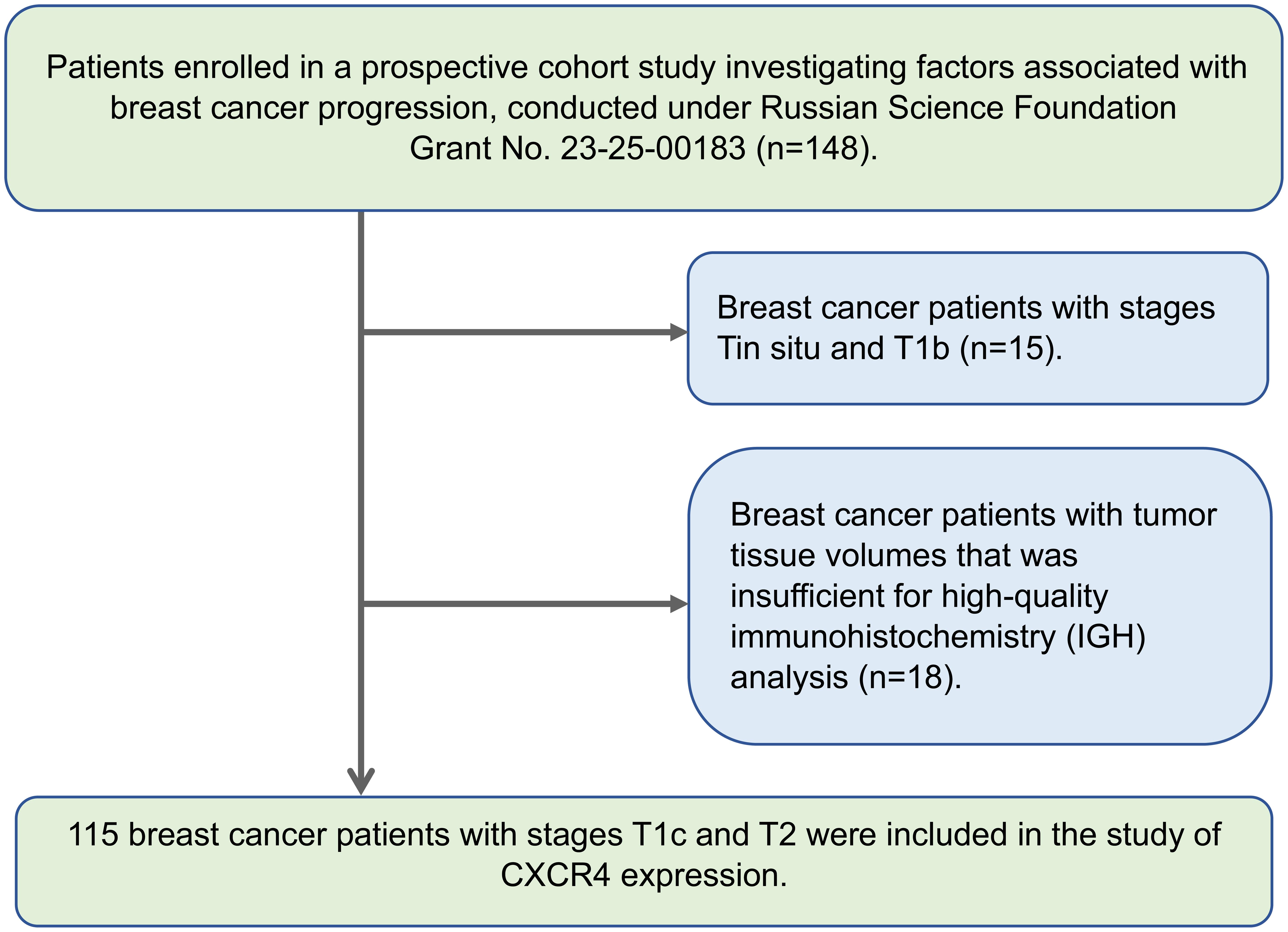
CXCR4, C-X-C motif chemokine receptor 4.
Standard clinical and instrumental examinations included mammography, ultrasound examination of the mammary glands and axillary lymph nodes, computed tomography of the chest and abdominal organs, bone scintigraphy, and core biopsy of the breast tumor with histological and immunohistochemical examination to determine the molecular subtype of BC. The 8th edition of the tumor-node-metastasis (TNM) classification of malignant tumors was used for BC staging. The inclusion criteria for the study were as follows: (1) invasive ductal BC; (2) disease stage T1–2N0–1M0; (3) patient age over 18 years; and (4) signed consent for inclusion in the clinical study. Patients who had received neoadjuvant therapy (chemotherapy, targeted therapy, or hormonal therapy), radiation therapy, corticosteroids, or nonsteroidal anti-inflammatory drugs prior to surgery were excluded. The study was conducted in accordance with the Declaration of Helsinki and internationally recognized guidelines. All patients provided written informed consent to participate in the clinical trial. Ethical approval was obtained from the Ethics Committee of Orenburg State Medical University (Protocol No. 311, dated January 13, 2023). The characteristics of the patients included in the study are presented in Table 1.
Characteristics of patients with breast cancer
| Breast cancer characteristics | n(%) | |
|---|---|---|
| Т stage | ||
| Т1 | 80 (69.6%) | |
| Т2 | 35 (30.4%) | |
| N stage | ||
| N0 | 56 (48.7%) | |
| N1 | 40 (34.8%) | |
| N2–3 | 19 (16.5%) | |
| Tumor Grade (G) | ||
| G1 | 16 (13.9%) | |
| G2 | 64 (55.7%) | |
| G3 | 35 (30.4%) | |
| Lymphovascular invasion | ||
| Absent | 64 (55.7%) | |
| Present | 51 (44.3%) | |
| Perineural invasion | ||
| Absent | 95 (82.6%) | |
| Present | 20 (17.4%) | |
| Intraductal component | ||
| Absent | 83 (72.2%) | |
| Present | 32 (27.8%) | |
| Estrogen receptor status | ||
| Negative | 12 (10.4%) | |
| Positive | 103 (89.6%) | |
| Progesterone receptor status | ||
| Negative | 44 (38.3%) | |
| Positive | 71 (61.7%) | |
| Human epidermal growth factor receptor 2 status | ||
| Negative | 103 (89.6%) | |
| Positive | 12 (10.4%) | |
| Breast cancer molecular biological subtype | ||
| Luminal A | 40 (34.8%) | |
| Luminal B HER2-negative | 59 (51.3%) | |
| Luminal B HER2- positive | 4 (3.5%) | |
| Nonluminal HER2-positive | 8 (6.9%) | |
| Triple negative breast сancer | 4 (3.5%) | |
All patients underwent radical surgery at the Orenburg Regional Clinical Oncology Center from January 15, 2023, to June 30, 2023. Breast-conserving surgery was performed in 67 patients (58.3%), and radical mastectomy was performed in 48 patients (41.7%). All patients underwent axillary lymph node dissection (levels I–II). In 19 patients included in the study, the disease stage was upstaged due to the detection of metastases in more than three examined lymph nodes (N2–3). Given the small number of patients included in the study and the short follow-up period, outcomes for all patients were tracked. No patients were lost to follow-up. The median follow-up time was 34 months.
Immunohistochemistry
Immunohistochemical staining for CXCR4 was performed according to the manufacturer’s instructions. Briefly, 4-µm-thick sections from formalin-fixed, paraffin-embedded tumor tissue blocks were deparaffinized, dehydrated in xylene, and rehydrated through a graded series of alcohol solutions. Staining was performed using anti-CXCR4 antibodies (1:100 dilution; Cloud-Clone Corp., Shanghai, China) on a fully automated BOND-MAX staining system (Leica Biosystems Melbourne Pty Ltd., Mount Waverley, Australia). The detection system included DAB with hematoxylin. For negative control samples, the primary antibodies were replaced with phosphate-buffered saline, and the samples were processed similarly. Normal colon mucosa served as a positive control.
Evaluation of CXCR4 expression in TCs
The intensity of CXCR4 expression in TCs was determined in five fields of view at 200× magnification as follows:
No expression = 0;
weak expression = 1;
moderate expression = 2.
Examples of CXCR4 expression intensity in TCs are shown in Figure 2.
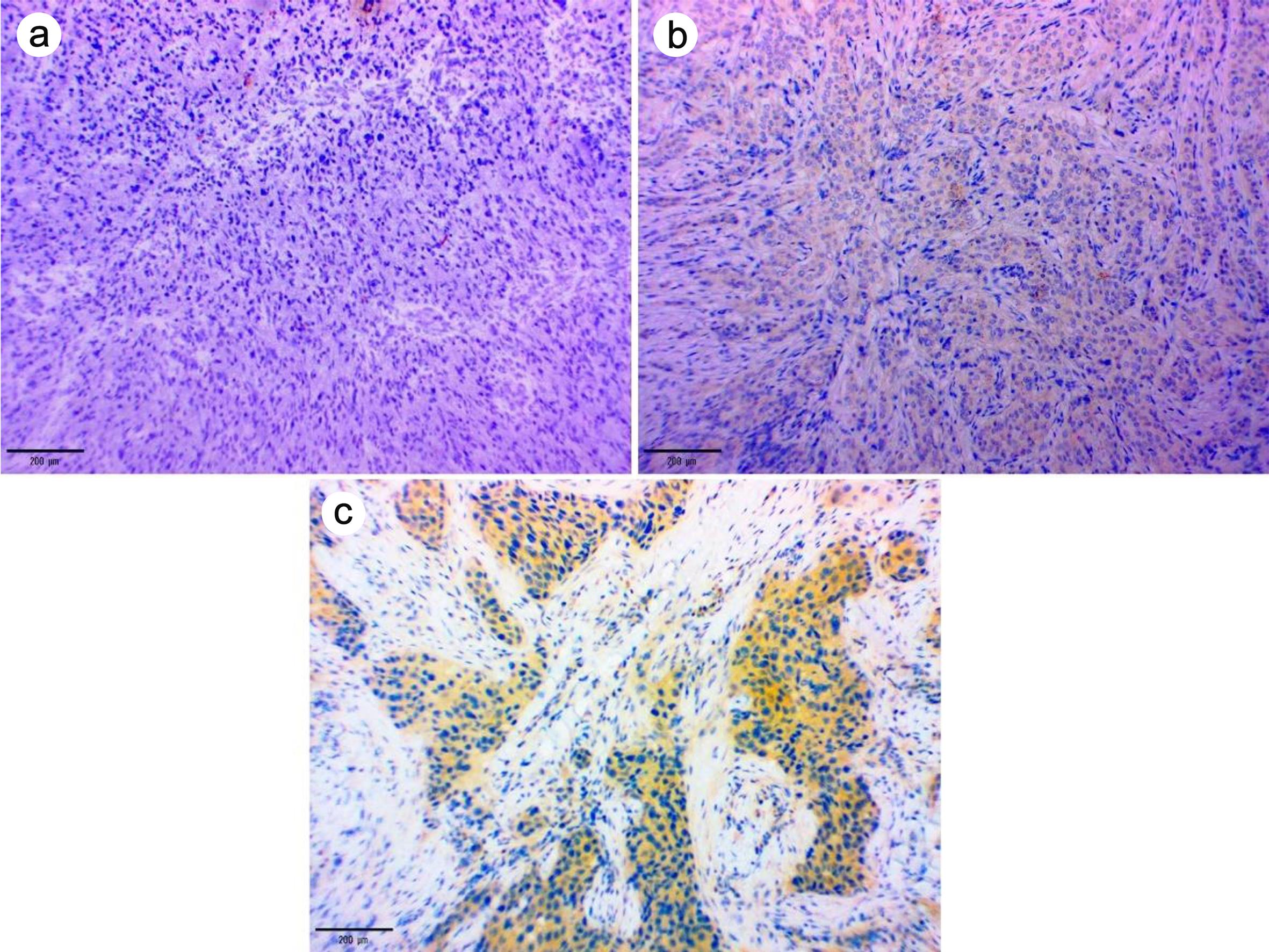
(a) no expression; (b) weak expression; (c) moderate expression. CXCR4 immunostaining; magnification, 200×; scale bars = 200 µm. CXCR4, C-X-C motif chemokine receptor 4.
Evaluation of CXCR4 expression in ICs
The expression of CXCR4 in ICs (intratumoral and peritumoral lymphocytes, macrophages, and dendritic cells) was assessed in five fields of view at 200× magnification and calculated as the proportion of the tumor area (non-necrotic and non-sclerotic regions) occupied by CXCR4+ ICs of any intensity. Four scoring intervals were used for CXCR4+ ICs: 0% = 0 (no expression); ≥0 and <10% = 1 (weak expression); ≥10% and <30% = 2 (moderate expression); and ≥30% = 3 (pronounced expression). Examples of CXCR4+ IC scoring are shown in Figure 3.
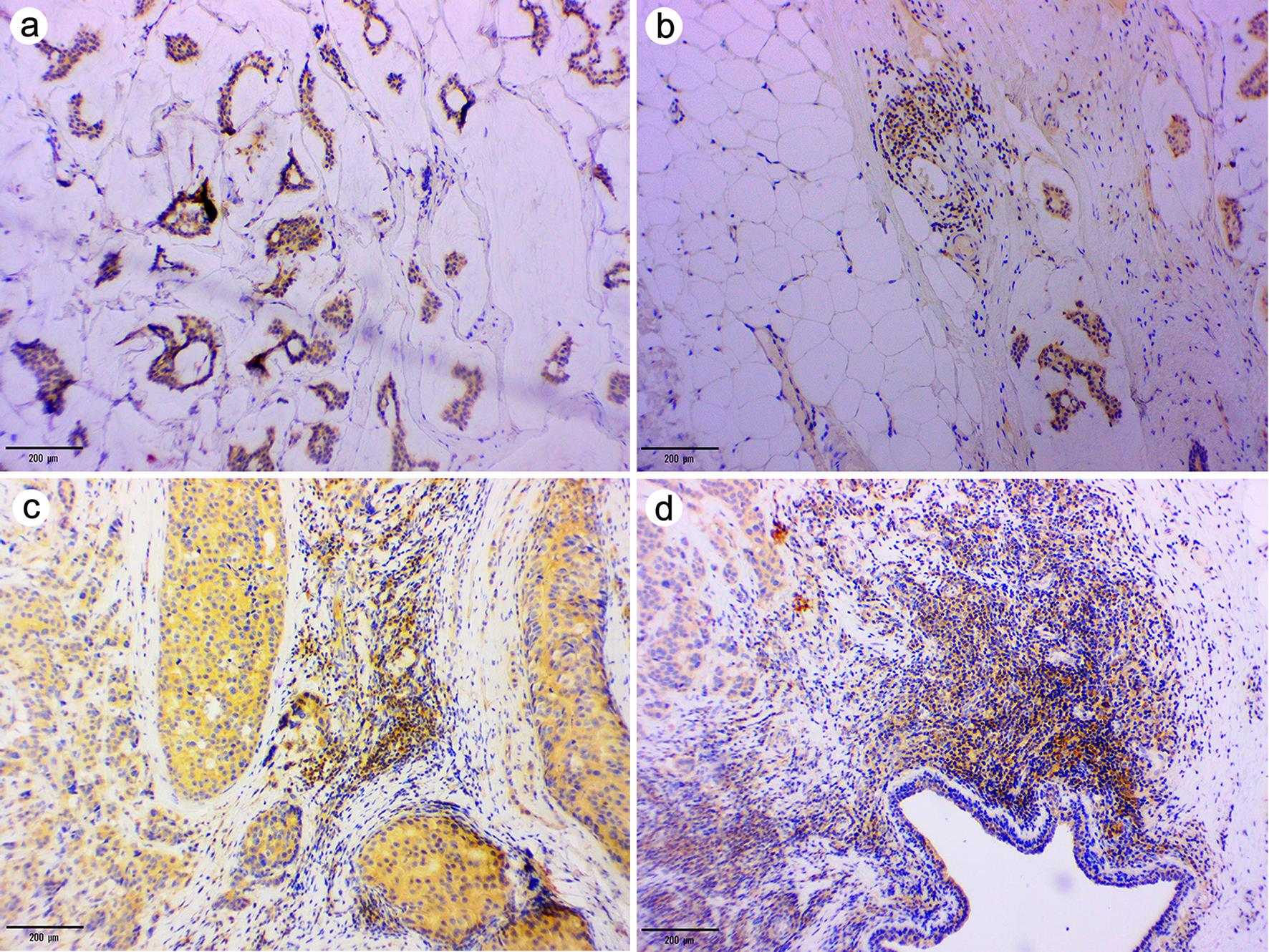
(a) no expression; (b) weak expression; (c) moderate expression; (d) pronounced expression. CXCR4 immunostaining; magnification, 200×; scale bars = 200 µm. CXCR4, C-X-C motif chemokine receptor 4.
Statistical analyses
Statistical analyses were performed using Statistica software version 12.0. Data are presented as means ± standard deviations or medians, depending on the normality of distribution. Normality of continuous data was assessed using the Kolmogorov–Smirnov test. Correlations between variables were assessed using nonparametric Spearman’s rank correlation (ρ) or Kendall’s rank correlation (τ), depending on the type of variables. Continuous variables were compared using the Mann–Whitney test or median tests. Categorical variables were compared using the chi-square test. To assess the association of CXCR4 expression with the clinical and pathological characteristics of patients with BC, odds ratios (ORs) were calculated. Multivariate regression analysis was performed to identify independent predictors of two-year disease-free survival (DFS). Intra- and interobserver concordance of CXCR4 expression scores in TCs and ICs was assessed using positive percentage agreement (PPA), negative percentage agreement (NPA), and overall rate of agreement (ORA). The strength of agreement was calculated using Cohen’s kappa coefficient. Survival was analyzed using the Kaplan–Meier method. The log-rank test was used to compare survival curves between patient subgroups. After adjustment for multiple testing using the Bonferroni correction (α = 0.05/2), a significance level of ≤0.025 was considered statistically significant.
Results
CXCR4 expression in TCs
In TCs, predominantly cytoplasmic expression of the marker was observed: expression was absent in 8 (6.9%) tumor samples, weak in 24 (20.9%) tumor samples, and moderate in 83 (72.2%) tumor samples. The frequency of marker expression according to the clinicopathological characteristics of patients with BC is presented in Table 2.
CXCR4 scores in tumor cells according to the clinicopathological characteristics of patients with breast cancer
| Breast cancer characteristics | CXCR4 scores in tumor cells n(%) | P Χ2 test | ||
|---|---|---|---|---|
| 0 | 1 | 2 | ||
| Т stage | 0.0182* | |||
| Т1 | 4 (5.0%) | 12 (15.0%) | 64 (80.0%) | |
| Т2 | 4 (11.4%) | 12 (34.3%) | 19 (54.3%) | |
| N stage | 0.2862 | |||
| N0 | 8 (14.3%) | 4 (7.1%) | 44 (78.6%) | |
| N1 | 0 (0%) | 12 (33.3%) | 40 (66.7%) | |
| N2–3 | 0 (0%) | 4 (21.1%) | 15 (78.9%) | |
| Tumor Grade (G) | 0.0056* | |||
| G1 | 4 (25.0%) | 4 (25.0%) | 8 (50.0%) | |
| G2 | 4 (6.3%) | 16 (25.0%) | 44 (68.7%) | |
| G3 | 0 (0%) | 4 (11.4%) | 31 (88.6%) | |
| Lymphovascular invasion | 0.0165* | |||
| Absent | 8 (12.5%) | 4 (6.3%) | 52 (81.2%) | |
| Present | 0 (0%) | 20 (39.2%) | 31 (60.8 %) | |
| Perineural invasion | 0.0837 | |||
| Absent | 4 (4.2%) | 20 (21.1%) | 71 (74.7%) | |
| Present | 4 (20.0%) | 4 (20.0%) | 12 (60.0%) | |
| Intraductal component | 0.1741 | |||
| Absent | 4 (4.8%) | 20 (24.1%) | 59 (71.1%) | |
| Present | 4 (12.5%) | 4 (12.5%) | 24 (75.0%) | |
| Estrogen receptor status | 0.0232* | |||
| Negative | 0 (0%) | 0 (0%) | 12 (100%) | |
| Positive | 8 (7.8%) | 24 (23.3%) | 71 (68.9%) | |
| Progesterone receptor status | 0.6897 | |||
| Negative | 8 (18.2%) | 4 (9.1%) | 32 (72.7%) | |
| Positive | 0 (0%) | 20 (28.2%) | 51 (71.8%) | |
| Human epidermal growth factor receptor 2 status | 0.0232* | |||
| Negative | 8 (7.8%) | 24 (23.3%) | 71 (68.9%) | |
| Positive | 0 (0%) | 0 (0%) | 12 (100%) | |
| Breast cancer molecular biological subtype | 0.00002* | |||
| Luminal A | 8 (20.0%) | 16 (40.0%) | 16 (40.0%) | |
| Luminal B HER2- negative | 0 (0%) | 8 (13.6%) | 51 (86.4%) | |
| Luminal B HER2-positive | 0 (0%) | 0 (0%) | 4 (100%) | |
| Nonluminal HER2-positive | 0 (0%) | 0 (0%) | 8 (100%) | |
| Triple negative breast cancer | 0 (0%) | 0 (0%) | 4 (100%) | |
Thus, moderate CXCR4 expression in TCs was significantly more frequent in patients with G3 tumors than in those with G1 and G2 tumors (OR = 4.17; 95% CI: 1.34–13.02; P = 0.014), and it was significantly less common in patients with luminal A BC than in those with other BC subtypes (OR = 0.15; 95% CI: 0.06–0.37; P < 0.0001). In addition, moderate CXCR4 expression in TCs was more frequent in patients with negative estrogen receptor (ER) status than in those with positive ER status (OR = 11.36; 95% CI: 0.65–197.83; P = 0.095) and in patients with positive HER2 status than in those with negative HER2 status (OR = 11.36; 95% CI: 0.65–197.83; P = 0.095). However, moderate CXCR4 expression in TCs was also observed significantly more frequently in patients with stage T1 BC than in those with stage T2 disease (OR = 0.30; 95% CI: 0.13–0.70; P = 0.0057) and in patients without lymphovascular invasion (LVI) than in those with LVI (OR = 0.22; 95% CI: 0.09–0.53; P = 0.0008).
Moderate CXCR4 expression in TCs was also correlated with patient age and the Ki-67 index. The Spearman correlation coefficient between age and CXCR4 expression in TCs was 0.380 (P = 0.000028). Age was significantly higher in patients with weak and moderate CXCR4 expression than in those with no expression of the marker (45.0 ± 8.6 years, 58.5 ± 2.7 years, and 66.5 ± 10.3 years, respectively; P = 0.0068, median test). Patient age according to CXCR4 expression in TCs is shown in Figure 4.
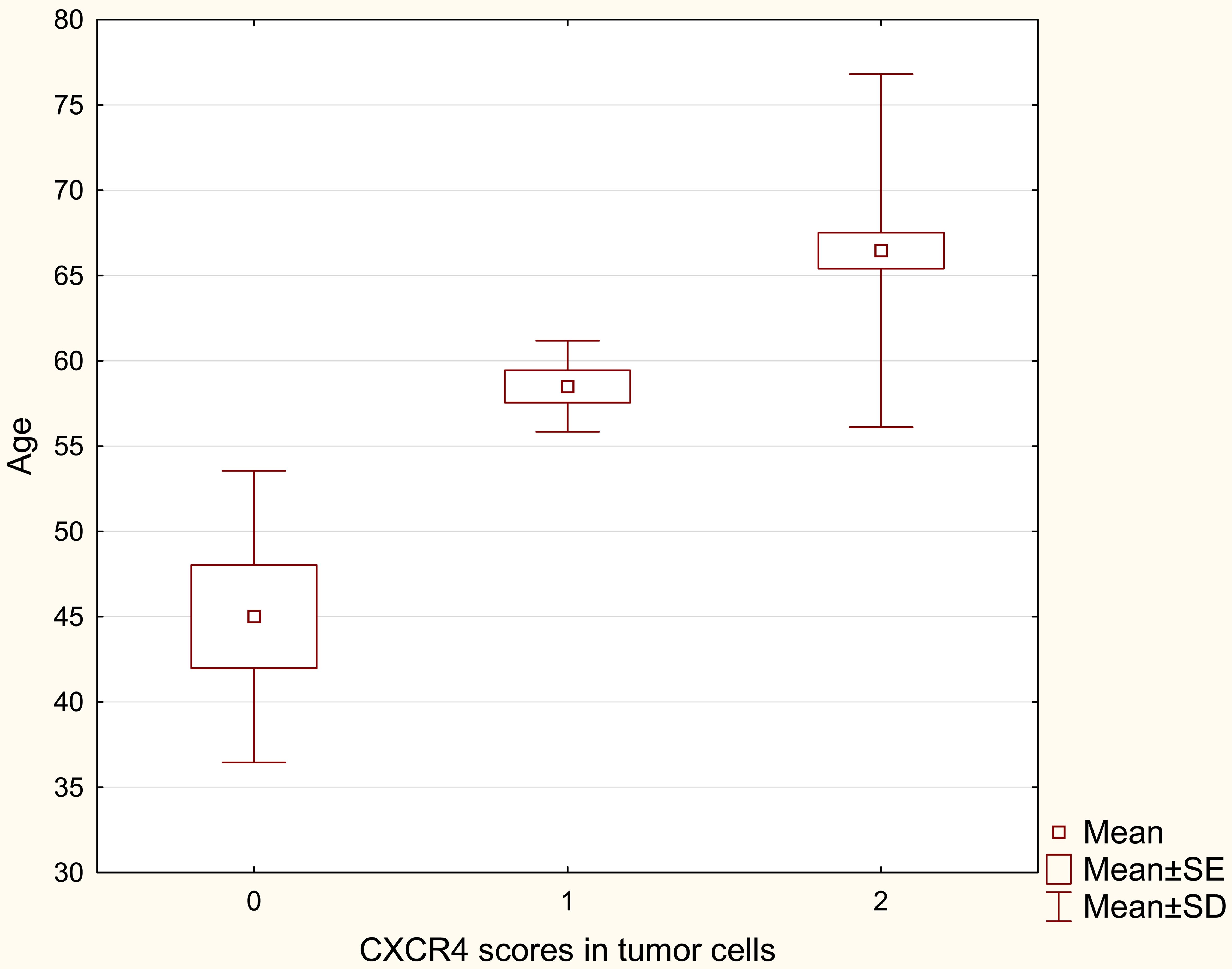
0 – no expression; 1 – weak expression; 2 – moderate expression. CXCR4, C-X-C motif chemokine receptor 4; SD, standard deviation; SE, standard error.
The Spearman correlation coefficient between the Ki-67 index and the level of CXCR4 expression in TCs was 0.517 (P < 0.00001). Moderate CXCR4 expression in TCs was significantly more frequent in patients with a Ki-67 index ≥ 40% than in those with a Ki-67 index < 40% (OR = 47.58; 95% CI: 20.82–803.36; P = 0.0074). In patients with no, weak, and moderate CXCR4 expression in TCs, the Ki-67 index was 6.0 ± 3.2%, 15.2 ± 7.6%, and 35.0 ± 17.0%, respectively (P < 0.00001, median test).
CXCR4 scores in ICs
In ICs, CXCR4 expression was predominantly cytoplasmic: expression was absent in 36 (31.3%) tumor samples, weak in 24 (20.9%) tumor samples, moderate in 27 (23.5%) tumor samples, and pronounced in 28 (24.3%) tumor samples. The frequency of marker expression according to the clinicopathological characteristics of patients with BC is presented in Table 3.
CXCR4 scores in immune cells according to the clinicopathological characteristics of patients with breast cancer
| Breast cancer characteristics | CXCR4 scores in immune cells n(%) | P Χ2 test | |
|---|---|---|---|
| 0–1 | 2–3 | ||
| Т stage | 0.0717 | ||
| Т1 | 44 (55.0%) | 36 (45.0%) | |
| Т2 | 16 (45.7%) | 19 (54.3%) | |
| N stage | 0.1717 | ||
| N0 | 24 (42.9%) | 32 (57.1%) | |
| N1 | 24 (60.0%) | 16 (40.0%) | |
| N2–3 | 8 (42.1%) | 11 (57.9%) | |
| Tumor Grade (G) | 0.00007* | ||
| G1 | 16 (100%) | 0 (0%) | |
| G2 | 32 (50.0%) | 32 (50%) | |
| G3 | 12 (34.3%) | 23 (65.7%) | |
| Lymphovascular invasion | 0.0428 | ||
| Absent | 28 (43.7%) | 32 (56.3%) | |
| Present | 32 (62.7%) | 19 (37.3%) | |
| Perineural invasion | 0.4408 | ||
| Absent | 48 (50.5%) | 47 (49.5%) | |
| Present | 12 (60.0%) | 8 (40.0%) | |
| Intraductal component | 0.0023* | ||
| Absent | 36 (43.4%) | 47 (56.6%) | |
| Present | 24 (75.0%) | 8 (25.5%) | |
| Estrogen receptor status | 0.1674 | ||
| Negative | 4 (33.3%) | 8 (66.7%) | |
| Positive | 56 (54.4%) | 47 (45.6%) | |
| Progesterone receptor status | 0.0527 | ||
| Negative | 28 (63.6%) | 16 (36.4%) | |
| Positive | 32 (45.1%) | 39 (54.9%) | |
| Human epidermal growth factor receptor 2 status | 0.4582 | ||
| Negative | 56 (54.4%) | 47 (45.6%) | |
| Positive | 4 (33.3%) | 8 (66.7%) | |
| Breast cancer molecular biological subtype | 0.00007* | ||
| Luminal A | 32 (80.0%) | 8 (20.0%) | |
| Luminal B HER2- negative | 24 (40.7%) | 35 (59.3%) | |
| Luminal B HER2-positive | 0 (0%) | 4 (100%) | |
| Nonluminal HER2-positive | 4 (50.0%) | 4 (50.0%) | |
| Triple negative breast cancer | 0 (0%) | 4 (100%) | |
Thus, moderate and pronounced CXCR4 expression in ICs was also significantly more frequent in patients with G3 tumors than in those with G1 and G2 tumors (OR = 2.88; 95% CI: 1.25–6.59; P = 0.0125), and it was significantly less common in patients with luminal A BC than in those with other BC subtypes (OR = 0.15; 95% CI: 0.06–0.37; P < 0.0001) and in patients with an intraductal component in tumors than in those without it (OR = 0.26; 95% CI: 0.10–0.63; P < 0.0001).
The Spearman correlation coefficient between the Ki-67 index and CXCR4 expression in ICs was 0.517 (P = 0.000003). Moderate and pronounced CXCR4 expression in ICs was significantly more frequent in patients with a Ki-67 index ≥ 40% than in those with a Ki-67 index < 40% (OR = 6.27; 95% CI: 2.52–15.62; P = 0.0001). In patients with absent, weak, moderate, and pronounced CXCR4 expression in ICs, the Ki-67 index was 14.8 ± 8.5%, 28.0 ± 12.9%, 34.2 ± 21.1%, and 42.4 ± 14.6%, respectively (P < 0.00001, median test).
Positive correlations were detected between CXCR4 scores in TCs and ICs (ρ = 0.478, P < 0.00001). The Cohen’s kappa index for CXCR4 expression in TCs and ICs was 0.421 ± 0.07 (95% CI: 0.293–0.549); the PPA was 56.6%, the NPA was 100%, and the ORA was 68.7%. The Cohen’s kappa indices for interobserver agreement for CXCR4 expression in TCs and ICs were 0.917 ± 0.041 (95% CI: 0.837–0.997) and 0.836 ± 0.056 (95% CI: 0.728–0.945), respectively. The PPA, NPA, and ORA were 95.2%, 100%, and 96.5%, respectively, for CXCR4 expression in TCs, and 91.6%, 96.9%, and 93.0%, respectively, for CXCR4 expression in ICs.
Analysis of 2-year DFS
During the observation period, disease recurrence occurred in 8 patients with BC. The analysis revealed no significant difference in 2-year DFS depending on CXCR4 expression in TCs (P = 0.055, log-rank test). The recurrence rate was 0% in patients with absent and weak CXCR4 expression in TCs and 9.4% in patients with moderate expression (P = 0.079). The 2-year DFS curves are shown in Figure 5.
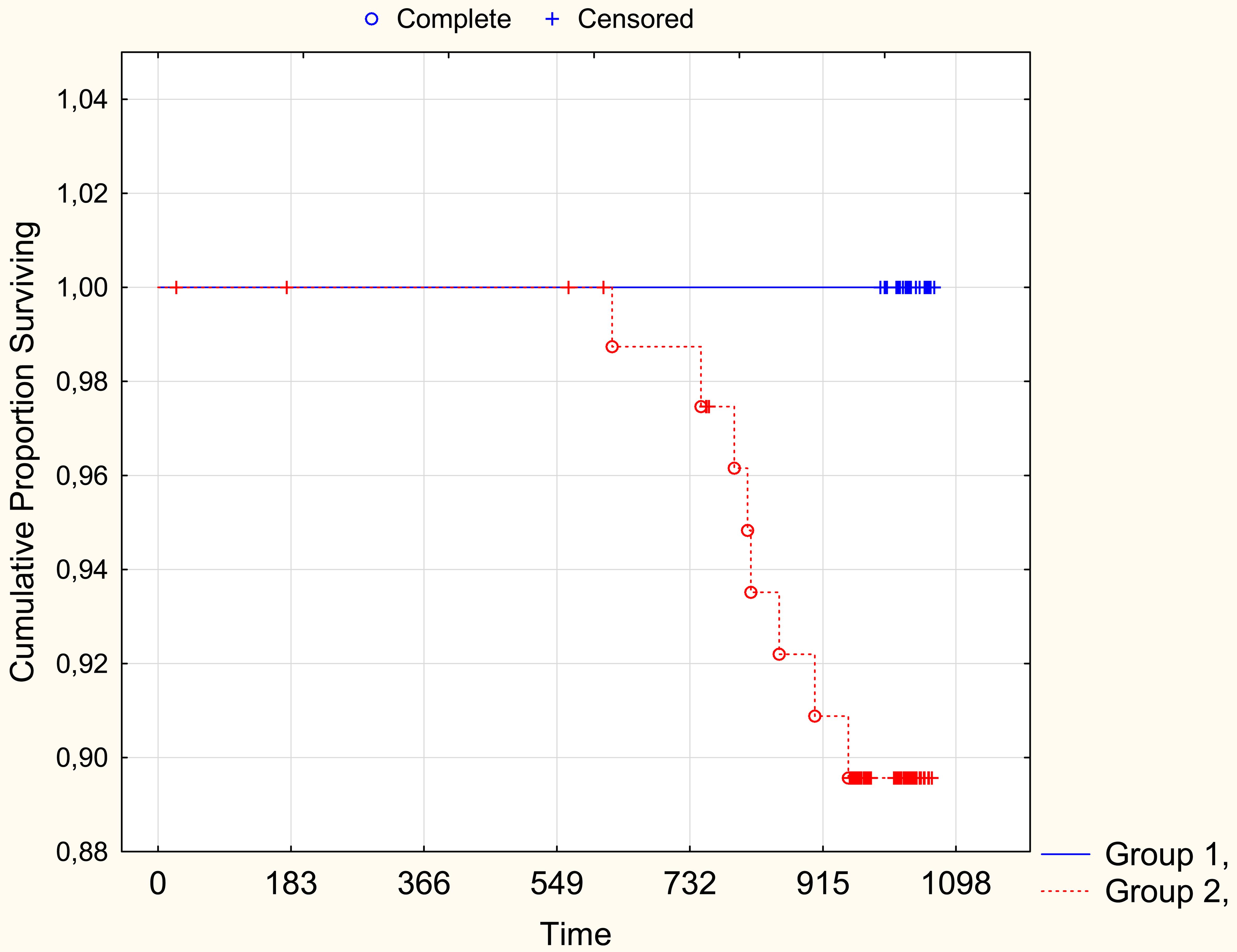
Group 1 – patients with no or weak expression; Group 2 – patients with moderate expression. CXCR4, C-X-C motif chemokine receptor 4; DFS, disease-free survival; TCs, tumor cells.
The analysis also revealed no significant differences in 2-year DFS depending on CXCR4 expression in ICs (P = 0.426, log-rank test). The recurrence rate was 5% in patients with absent or weak CXCR4 expression in ICs and 9.1% in those with moderate or pronounced expression (P = 0.389). The 2-year DFS curves are shown in Figure 6.
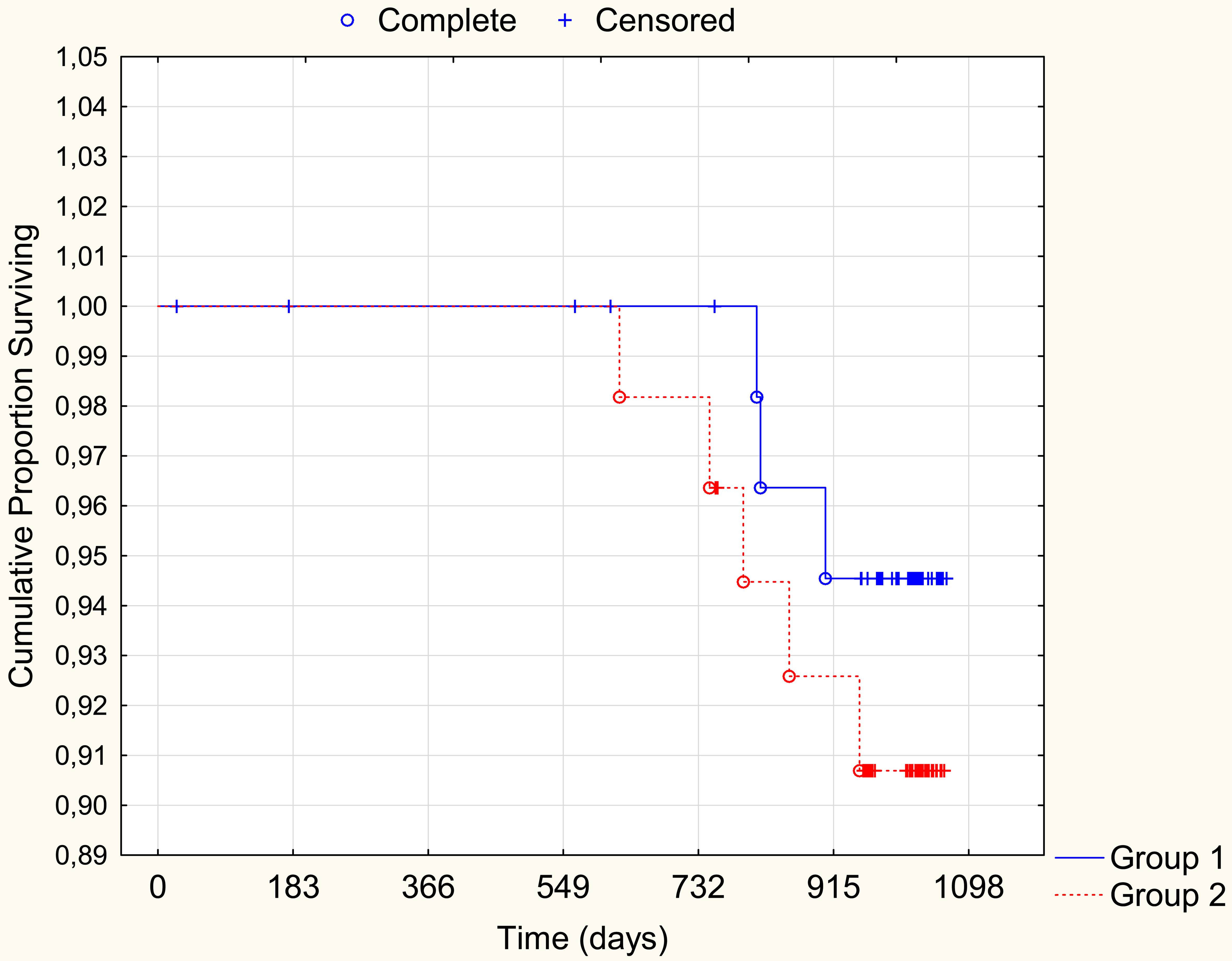
Group 1 – patients with no or weak expression; Group 2 – patients with moderate or pronounced expression. CXCR4, C-X-C motif chemokine receptor 4; DFS, disease-free survival; ICs, immune cells.
To identify independent predictors associated with 2-year DFS in patients with stage T1–T2 BC, a multivariate regression analysis was conducted. Given that the correlation coefficient between N and LVI was 0.757 and that between BC molecular subtype and ER status was 0.833, LVI and BC molecular subtype were removed from the analysis. The results of the multivariate regression analysis are presented in Table 4.
The results of the multivariate regression analysis of independent predictors associated with 2-year DFS
| Beta | Standard error of Beta | B | Standard error of B | t | P-level | |
|---|---|---|---|---|---|---|
| Intercept | 3.0354 | 0.2753 | 11.0273 | 4.94970713E-19 | ||
| Age | −0.1637 | 0.0944 | −0.0553 | 0.0316 | −1.7409 | 0.084855 |
| Surgery (Mastectomy vs breast resection) | 0.4253 | 0.1135 | 0.2194 | 0.0585 | 3.7476 | 0.000297* |
| T stage (T1 vs T2) | −0.4722 | 0.0944 | −0.2611 | 0.0522 | −5.0207 | <0.00001* |
| N stage (N0–1 vs N2–3) | −0.6049 | 0.0863 | −0.3848 | 0.0549 | −7.0097 | <0.00001* |
| Tumor grade (G) | −0.1422 | 0.0931 | −0.0561 | 0.0367 | −1.5276 | 0.129877 |
| Perineural invasion | 0.0896 | 0.1084 | 0.0602 | 0.0728 | 0.8272 | 0.410160 |
| Intraductal component | −0.0023 | 0.1233 | −0.0013 | 0.0771 | −0.0192 | 0.984646 |
| Estrogen receptor status | −0.0183 | 0.1089 | −0.0152 | 0.0907 | −0.1679 | 0.866974 |
| Progesterone receptor status | −0.1645 | 0.1019 | −0.0861 | 0.0534 | −1.6138 | 0.109860 |
| Human epidermal growth factor receptor 2 status | −0.1953 | 0.0986 | −0.1626 | 0.0826 | −1.9822 | 0.050172 |
| Ki-67 index | 0.0615 | 0.1333 | 0.0009 | 0.0019 | 0.4577 | 0.648140 |
| CXCR4 expression in TCs (0–1 vs 2) | −0.3129 | 0.1282 | −0.1776 | 0.0729 | −2.4406 | 0.016401* |
| CXCR4 expression in ICs (0–1 vs 2–3) | 0.1573 | 0.1253 | 0.0801 | 0.0638 | 1.2554 | 0.212196 |
Thus, stage T2, N2–3, breast-conserving surgery, and moderate CXCR4 expression in TCs were independent predictors of early disease recurrence in the studied cohort. No association was found between CXCR4 expression in ICs and the risk of BC recurrence in this cohort.
Discussion
BC remains a serious medical, social, and economic problem in most countries worldwide. Although the incidence of BC continues to increase, mortality from this disease is declining, especially in high-income countries. This is due to both the widespread implementation of screening programs for early diagnosis of BC and the development of highly effective systemic therapy regimens for this disease.22,23 However, BC is a highly heterogeneous disease. Different molecular subtypes of BC differ in morphological characteristics, sensitivity to drug therapy, and prognosis. The role of many factors involved in BC progression has yet to be fully determined.
The tumor microenvironment, which consists of ICs, stromal components, and numerous signaling molecules, influences tumor growth, progression, and treatment outcomes in patients with BC. The effects of ICs are mediated through interactions between chemokines and their specific receptors.24 One of the most studied chemokines is CXCL12, which binds to its specific receptor, CXCR4. CXCL12 is secreted by cancer-associated fibroblasts, mesenchymal stem cells, and endothelial cells. CXCR4 is an integral membrane G protein–coupled receptor that is overexpressed in many solid tumors, including aggressive triple-negative breast cancer (TNBC), for which there is currently no specific targeted therapy.25 The CXCL12/CXCR4 axis activates multiple downstream signaling pathways that promote cancer cell proliferation and migration, metastasis and angiogenesis, tumor immune evasion, and influence BC sensitivity to systemic therapy.1,13,17,24,26 In mouse models of metastatic BC, the use of a CXCR4 inhibitor reduced fibrosis and immunosuppression by increasing tumor stromal infiltration with cytotoxic T lymphocytes. CXCR4 inhibition more than doubled the response to immune checkpoint blockade and reduced the rate of metastasis in mice with metastatic BC.27 In another experiment, CXCR4 overexpression increased resistance of TCs to cisplatin, whereas CXCR4 downregulation significantly inhibited TC growth, reduced colony formation, and increased tumor sensitivity to cisplatin. In tumor-bearing mice, downregulation of CXCR4 expression enhanced the antitumor activity of cisplatin, mediated by TC apoptosis. The authors suggest that CXCR4 may be a therapeutic target for TNBC.28 Other researchers share a similar view, suggesting that targeted therapy directed at the CXCR4/CXCL12 axis may be promising for the treatment of TNBC.15,17,25 In an orthotopic TNBC mouse model, inhibition of CXCR4 expression resulted in reduced tumor growth and metastasis to the liver and lungs.29
However, some studies have experimentally demonstrated that blocking the CXCR4/CXCL12 pathway suppresses angiogenesis, tumor growth, and dissemination only in HER2-positive BC, whereas in TNBC, inhibitors of the CXCR4/CXCL12 axis do not reduce tumor growth and may even promote metastasis.30 These discrepancies may indicate that CXCR4 expression should be considered in conjunction with other BC characteristics, such as the degree of inflammatory infiltration of the tumor stroma.
Notably, clinical studies on CXCR4 expression patterns in BC remain limited. Some studies have shown that CXCR4 expression in TCs correlates with TNM stage, tumor size, lymph node metastases, and histological grade.14,31 Patients with high CXCR4 expression in tumor tissue are more likely to have LVI, lymph node metastases, and visceral metastases and have shorter survival compared with patients with low expression, which is especially relevant for patients with TNBC.29,31–34 Furthermore, high CXCR4 expression in tumor tissue is associated with lower efficacy of platinum-based chemotherapy as well as anthracycline therapy combined with paclitaxel.30,34 High expression of SRY-box transcription factor 2 and CXCR4 after neoadjuvant chemotherapy in patients with TNBC has been associated with early relapse and chemotherapy resistance.35
A previous immunohistochemical study of five molecular subtypes of BC reported that CXCR4 protein expression was lowest in luminal A tumors and highest in basal-like tumors, supporting the relatively favorable biological profile of luminal A BC.36 In a meta-analysis by Liao et al., high CXCR4 expression was more frequently detected in basal-like and HER2-positive BC subtypes than in luminal A and luminal B subtypes. However, increased CXCR4 expression predicted better DFS but did not confer an overall survival benefit in patients with BC. Moreover, a survival benefit associated with high CXCR4 mRNA expression was observed in the ER-negative group but not in the ER-positive group.37
Interestingly, analysis of CXCL12 and CXCR4 concentrations in venous blood from patients with early-stage luminal A and B BC subtypes, patients with fibroadenomas, and healthy women revealed lower CXCL12 concentrations in patients with BC than in those with fibroadenomas and healthy individuals, whereas the highest CXCR4 concentrations were detected in patients with BC. It is possible that the decreased CXCL12 concentration in the venous blood of patients with BC is associated with binding by TCs and other CXCR4-expressing cells.24
In this study, we examined CXCR4 expression in TCs and ICs in patients with BC. According to the results obtained, moderate CXCR4 expression in TCs was associated with unfavorable prognostic factors, such as G3 tumors, negative ER status, HER2 overexpression, and a high Ki-67 index. However, moderate CXCR4 expression in TCs was also detected more frequently in patients with stage T1 BC than in those with stage T2 BC and in patients without LVI than in those with LVI. We believe this may be due to confounding factors as well as the possibility that the role of CXCR4 expression in TCs differs between early and advanced stages of BC.
Regarding CXCR4 expression in ICs, moderate and pronounced expression of this marker was significantly more common in G2 and G3 tumors than in G1 tumors and significantly less common in luminal A tumors than in other molecular subtypes of BC. The Ki-67 index was also significantly higher in patients with moderate and pronounced CXCR4 expression in ICs than in those with absent or weak expression.
Analysis of 2-year BC survival revealed that although disease recurrence occurred more frequently in patients with moderate CXCR4 expression in TCs than in those with absent or low expression, these differences were not statistically significant. However, in multivariate regression analysis, moderate CXCR4 expression in TCs, along with T2 and N2–3 stage, was an independent predictor of BC recurrence risk. Considering that all patients with recurrent BC had N2–3 stage, a Ki-67 index ≥ 40%, and luminal A (n = 3) or luminal B (n = 5) HER2-negative BC, it can be assumed that the high risk of recurrence in these patients was associated with the limited efficacy of adjuvant systemic and radiation therapy. However, given the small cohort size, short follow-up period, predominance of early-stage BC, and low number of events, conclusions regarding the association between CXCR4 expression in TCs and BC recurrence cannot be considered definitive. No significant differences in 2-year DFS were detected according to CXCR4 expression in ICs.
Limitations
This study has several important limitations. First, it is an observational study and therefore subject to confounding factors and potential bias. Second, limitations include the small sample size, the limited number of patients with aggressive BC subtypes, the predominance of stage I–II disease, the short follow-up period, and the single-center design. Given that only eight cases of recurrence were observed, the analysis of survival outcomes has limited statistical power. Furthermore, although semiquantitative assessment of marker expression is widely used in oncology, it may introduce subjectivity. To improve objectivity, standardization of the assessment method and clinical and analytical validation—including evaluation of reagents, equipment, test systems, and other influencing factors—is required.
Conclusions
Thus, the results of our study are consistent with those of other clinical trials, which have also demonstrated an association between CXCR4 expression and unfavorable prognostic factors in BC, including G3 tumors, negative ER status, HER2 overexpression, and a high Ki-67 index. However, unlike previous studies, we evaluated CXCR4 expression not only in TCs but also in ICs and demonstrated that both parameters are interrelated and associated with indicators of BC progression. Unfortunately, the available data did not allow us to assess the impact of CXCR4 expression on long-term outcomes, as the study primarily included patients with early-stage BC and a two-year follow-up period was insufficient for prognostic evaluation. Further studies investigating CXCR4 expression and its associations with clinical characteristics, treatment response, and prognosis in BC are warranted.
Declarations
Acknowledgement
The authors express their most sincere gratitude to the head of the pathology laboratory of the Orenburg Regional Clinical Oncology Center, Nikon Zaitsev, and to all the staff of this laboratory for their comprehensive assistance and support in performing immunohistochemical studies.
Ethical statement
The study was conducted in accordance with the Declaration of Helsinki (as revised in 2024) and internationally recognized guidelines. All patients provided written informed consent to participate in the clinical trial. Ethical approval was obtained from the Ethics Committee of Orenburg State Medical University (Protocol No. 311, dated January 13, 2023). The authors followed the STROBE guidelines, and the relevant checklist was included.
Data sharing statement
The data from this study are available upon request from the corresponding author. They are not publicly available because of restricted access to the public repository in our region.
Funding
This study was supported by the Russian Science Foundation, grant No. 23-25-00183,
Conflict of interest
The authors declare that they have no conflicts of interest.
Authors’ contributions
Conceptualization (MS), data curation (NS), formal analysis (MS), funding acquisition (MS), investigation (NS, MS), methodology (MS), project administration (MS), supervision (MS), visualization (NS), writing – original draft (MS), and writing – review & editing (MS, NS). All authors have read and approved the final manuscript.